Independent AI due diligence for investors and acquirers
Independent technical assessment of whether the AI is worth the price, and whether the advantage will last. For pricing a deal, readying a company for sale, or building value in one you already own.
Dr Colin Kelly
PhD in NLP (Cambridge)
Former Head of Applied AI Research
Fully independent. No vendor affiliation, no implementation upsell
AI companies all claim technical differentiation
Every pitch deck claims proprietary AI, and every demo looks impressive.
Some of that AI is a custom model. Some is a thin layer over a commodity API. The demo looks the same either way, and it can hide architecture that breaks under load and that a competitor can copy.
Legal and financial due diligence check the contracts and the numbers. They don't test whether the model works, where the training data came from, or what breaks at 10x.
The same questions apply inside companies you already own. Portfolio businesses carry AI opportunity nobody has mapped and AI debt nobody has priced: brittle pilots that never reached production, vendor commitments that don't fit the operating model, and a plan built on what suppliers pitched rather than what the business can absorb.
The stakes:
- •Overvaluation based on AI claims that don't survive technical scrutiny
- •Hidden technical debt that becomes your problem post-acquisition
- •"Key person" dependencies masked by impressive demos
- •Advantages that foundation models commoditise away
- •Value-creation plans that assume AI capability the company doesn't have, at a cost nobody has estimated
Three questions, one assessment
The engagement takes three forms, depending on where you sit relative to the company. The method is the same six-dimension assessment; the question it answers is different.
Readying a company for sale
Will the AI claim in the deck survive buy-side scrutiny? Before a process opens, I verify and document the AI capability so it does. An independent report shortens the buyer's technical diligence and keeps the process moving.
Typical trigger: an exit on the horizon, a data room being assembled, or an M&A advisor readying the AI story for market.
Pricing a deal
Is the target's AI defensible, and worth what the valuation assumes? I assess the technology before you commit capital, so the AI claim in the deck is priced on evidence.
Typical trigger: a term sheet, an LOI, or an investment committee asking questions the data room can't answer.
Building value in a company you own
Where can AI create value in this business, what AI debt is already on the books, and what does capturing the opportunity cost? I assess the company's systems, data, and team against what the business can absorb.
Typical trigger: a hold-period value-creation plan, an operating partner review, or an AI initiative that has stalled and nobody can say why.
Is this right for you?
This service is for:
Investors (VC, PE, family offices) evaluating AI-focused companies before investing
Private equity firms and operating partners assessing AI readiness and value-creation potential in companies they already own, or are acquiring for operational reasons
Corporate M&A teams assessing AI capabilities as part of acquisition due diligence
Exiting founders and their M&A advisors who want the AI capability verified and documented before a sale process opens
Executives considering major AI vendor commitments or platform bets
Boards who need independent technical assessment before approving the budget
The assessment follows the technical evidence, whichever way that cuts for the deal.
A framework built from practice
The six dimensions
Technical Reality
Whose model is it, and what is built on top? Automated code analysis plus human review of architecture, model choices, and implementation quality.
Defensibility & Moat
Will this advantage persist? I assess data assets, proprietary training, switching costs, and exposure to foundation model commoditisation.
Scalability
What breaks at 10x? I review infrastructure, cost dynamics, and technical debt that compounds with growth.
Team Capability
Can they execute the roadmap? I evaluate technical leadership depth, key person dependencies, and realistic delivery capacity.
Data & Governance
Where's the risk? I assess data provenance, privacy compliance, and responsible AI practices.
Commercial Alignment
Do the technical capabilities support the revenue model and growth claims? I find the gap between what the tech can do and what the pitch deck promises.
What I assess
| The claim | What I check |
|---|---|
| "Proprietary AI" | Custom models, fine-tuned, or API wrapper? |
| "Unique data moat" | Is the data differentiated and defensible? |
| "Advanced ML capabilities" | What have they built beyond a standard implementation? |
| "Scalable platform" | Will it scale, or will it break at 10x load? |
| "Strong technical team" | Can they build what's needed for the next 3 years? |
| "First-mover advantage" | Technical moat, or a temporary lead? |
Why investors and operators trust the assessment
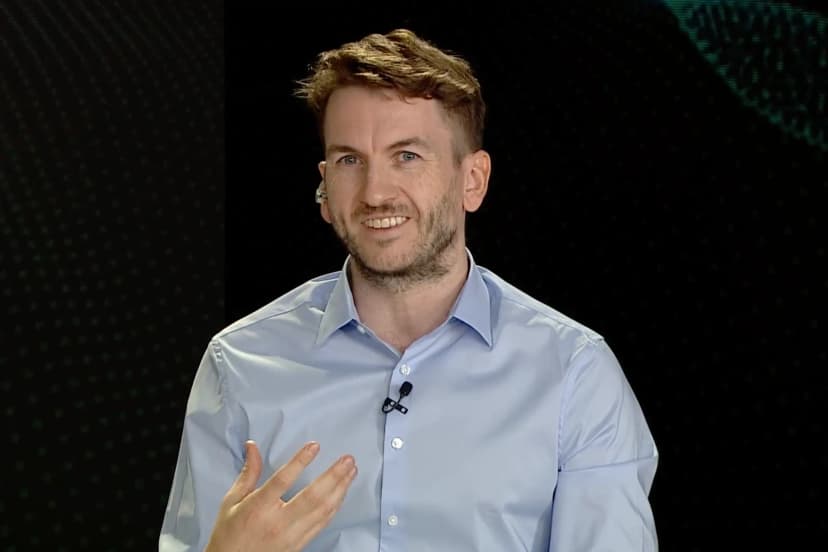
I hold a PhD in Natural Language Processing from Cambridge and read Mathematics and Computer Science at Oxford. My technical work in AI spans IBM, PA Consulting and two VC-backed AI scale-ups, and predates LLMs by a decade.
PhD in Natural Language Processing, University of Cambridge: Original research in extracting knowledge from unstructured text
Head of Applied AI Research, AI Defence Platform: Led the team delivering production AI capabilities
AI Value Assessment Experience, IBM: Identified €50m+ in AI-driven benefits across telco, financial services, and automotive sectors
Founder, Committee for Responsible AI:
Fractional CTO: 20 months taking an AI product from concept to public beta, so my assessments reflect how AI is built today
Invited speaker, Cambridge MSt in AI Ethics & Society, on AI capability and governance:
An assessor who profits from finding work has a reason to find it. I take no build or remediation work on anything I assess, charge a fixed fee, and have no vendor affiliation.
Deliverables that drive decisions
Standalone Technical Assessment Report including:
Executive Summary
A technical verdict on each claim, and what the findings mean for your thesis or value-creation plan
AI Opportunity Map
Where AI creates value in the business, and what capturing it costs
Technical Reality Assessment
Whose model is it, and is it defensible?
Risk Register
Severity ratings, mitigation options, and estimated remediation costs and timelines
Scalability Analysis
What breaks, when, and what it costs to fix
Team & Capability Evaluation
Can they deliver what they promise?
Competitive Positioning
How does their tech compare to alternatives?
Questions for Management
Issues needing founder or CTO clarification
Optional add-on: Integration with your legal and financial DD workstreams
Every report is written for the engagement.
Two weeks to clarity
Phase 1: Scope Definition
Day 1
We agree the question the assessment has to answer, whether that's the investment thesis for a deal or the value-creation plan for a company you own, and what would change your decision.
Phase 2: Technical Review
Days 2-6
I read the documents and the code, interview the founders and engineers, and check what the data room says against all three. From the data room I ask for architecture documentation, model cards, dataset documentation, training and deployment records, and performance and monitoring logs. The code gets automated analysis and my own review, and capability demonstrations get independent testing. Gaps in the documentation go into the risk register.
Phase 3: Analysis & Synthesis
Days 7-8
I synthesise the findings against your thesis or value-creation plan: which claims hold up, what the risks are, and what the business is missing.
Phase 4: Report & Debrief
Days 9-10
A written report with a severity rating on every finding, and a live debrief with your investment or operating team.
Pricing and timeline
Full Due Diligence
From $15,000
The six-dimension assessment, report and debrief.
Larger Buy-Side Mandates
Priced against the decision
From $15,000 for the two-week assessment. Larger mandates are priced as a fraction of a percent of deal value.
Core assessment: two weeks | Larger scopes: up to six | Start: typically within one week | Expedited timelines available | Every engagement confidential and NDA-protected
Related insights

AI governance: what business leaders need to know
Most organisations are building AI compliance theatre whilst competitors build capability fortresses, treating governance as bureaucratic overhead rather than the competitive advantage that enables sustainable AI deployment.

Richard Sutton's bitter lesson explains why your AI solution feels shallow
Sutton's bitter lesson reveals that most AI implementations feel shallow because they prioritize domain expertise over computational scale, leaving roughly 80% of potential untapped.
Should I build my own large language model (LLM)?
Organizations considering building their own large language models (LLMs) should weigh the benefits of control and specialisation against challenges like high computational needs and expertise requirements.
Working to a deal timetable?
The core assessment takes two weeks and typically starts within a week, so the findings are in hand before you sign, while there's still time to act on them. I'll tell you quickly if it's not a fit.
Or download the scoring checklist to get started
Frequently asked questions
How quickly can you start?
Typically within one week of engagement confirmation.
Do you need source code access?
Preferred but not required. The full assessment uses codebase access, architecture documentation, technical team interviews and live system access. Without the code, the documentation, live demonstrations and technical interviews still cover architecture, model choices, data provenance, team capability and commercial alignment. What they can't show is implementation quality or the depth of technical debt, so the report flags those as unverified rather than assessed.
What if the target company is uncooperative?
Reluctance itself is informative. I can assess based on available materials and flag gaps as risks.
Do you work under NDA?
Always. All engagements are fully confidential.
How is this different from Big 4 or standard technical due diligence?
Three differences. First, I've taken an AI product from concept to public beta myself, so I know where production systems break and which claims to test first. Second, the assessment covers only the AI: the model, the data, the engineering and the claims made for them. Third, the person you brief is the person who reads the code, runs the interviews and writes the report.
What if the assessment finds problems?
The report gives every issue a severity rating, and the risk register sets out estimated remediation costs and timelines. I help you understand whether issues are deal-breakers, negotiation points, or post-acquisition fixes. Most negative findings change the price or the deal structure. A few end the deal.
Do you assess companies we already own?
Yes. The same six-dimension assessment applies, pointed at a different question: instead of "is this target's AI worth the price", it answers "where can AI create value in this business, what AI debt is already on the books, and what would capturing the opportunity cost". This suits hold-period value-creation planning, operating partner reviews, and initiatives that have stalled without a clear diagnosis.
What does a value-creation assessment deliver?
An AI opportunity map grounded in the company's systems, data, and team rather than vendor claims; a register of existing AI debt with severity and remediation costs; and a sequenced view of what to fix, build, or buy first. The output is a plan your operating team can execute, with the costs stated before you commit budget. I take no build or remediation work on anything I assess, so none of that plan is work for me.
We're preparing to sell. Can you assess our own AI before the process opens?
Yes. That's sell-side readiness: I verify and document the AI capability before a process opens, so the claim in the deck survives buy-side scrutiny. An independent report shortens the buyer's technical diligence and keeps the process moving.
Do you provide investment recommendations?
I don't make the investment recommendation, because that decision depends on factors beyond the technology. What the report gives you is a technical verdict on each claim, its severity, and what each finding means for your investment thesis.
Other Services
The checklist as a scoring sheet
The 12 questions, with the answers graded and a score at the end
The questions themselves are free to read online: the AI due diligence checklist. The PDF adds graded answers and a score.
Download the scoring version
Each of the 12 questions with a green-flag answer and a red-flag answer, a 0 to 3 score per question, and what the total means for the deal. 16 pages, PDF.